

Introduction
There is something powerful that happens when a new Christian begins to read the Bible not just in pieces, not just when life is difficult, and not just when a favorite verse appears on a coffee mug, but all the way through from beginning to end. Reading the Bible in a year may sound like a large goal at first, especially if you are new to the faith. The Bible is a big book. It has history, poetry, prophecy, wisdom, letters, law, worship, warnings, promises, and stories that stretch from the creation of the world to the hope of eternity. At first glance, it can feel overwhelming. But when a believer chooses to walk through Scripture day by day, something beautiful begins to happen. The Bible stops feeling like a collection of disconnected religious sayings and begins to unfold as one grand story: God creating, loving, calling, correcting, saving, redeeming, and restoring His people through Jesus Christ.

Reading the Bible all the way through in a year is important because it helps a Christian develop a steady relationship with the Word of God. Just as the body needs daily food, the soul needs daily truth. A Christian who only reads the Bible occasionally may still receive encouragement, but the believer who reads consistently begins to build spiritual strength over time. The goal is not to rush through Scripture just to say, “I finished.” The goal is to sit with God’s Word regularly, to listen, to learn, and to allow the Holy Spirit to shape the heart. A one-year Bible reading plan gives structure to that journey. It gives the new Christian a path to follow, a rhythm to keep, and a daily appointment with the Lord.
One of the great blessings of reading the whole Bible is that it helps you understand who God is. Many people know a few ideas about God, but Scripture reveals His character in a much deeper way. In Genesis, we see God as Creator. In Exodus, we see Him as Deliverer. In the Psalms, we see Him as Shepherd, Refuge, and King. In the prophets, we see His holiness, justice, mercy, and patience. In the Gospels, we see the fullness of God revealed in Jesus Christ, who heal’s the sick, welcomes sinners, teaches truth, dies on the cross, and rises again. In the letters of the New Testament, we learn how to live as followers of Christ. In Revelation, we see the final victory of God and the hope of a restored creation. When you read the Bible all the way through, you do not just learn facts about God; you begin to see His heart.
Reading the whole Bible also helps a new Christian understand the story of salvation. Many believers begin with the New Testament, and that is a wonderful place to start because it introduces us clearly to Jesus. But the New Testament becomes even richer when we understand the Old Testament foundation behind it. The promises to Abraham, the deliverance from Egypt, the sacrifices in the temple, the words of the prophets, the longing for a Messiah, and the hope of a coming kingdom all point forward to Christ. Jesus did not appear randomly in history. He came as the fulfillment of God’s long and faithful plan. When you read the Bible from start to finish, you begin to see that God has always been working, even when people failed, wandered, doubted, or rebelled. That truth can bring great comfort to a new Christian who is still learning how to trust God in everyday life.
Another reason it is important to read the Bible in a year is that it builds discipline. Spiritual growth does not usually happen by accident. A person does not become strong in prayer, faith, wisdom, or obedience without practice. Reading Scripture every day teaches the heart to return to God again and again. Some days the reading will feel exciting. Some days it may feel difficult. Some days you may read a passage and feel deeply moved. Other days you may read and wonder what it means. That is normal. The Christian life is a walk, not a sprint. The discipline of daily Bible reading teaches you to keep showing up before God even when your emotions change. Over time, that steady habit becomes a foundation for spiritual maturity.
A new Christian also needs the Bible because it teaches truth in a world full of confusion. We live in a time when many voices compete for our attention. Social media, news, entertainment, friends, culture, and personal feelings all try to tell us what is true, what matters, and how we should live. But the Word of God gives us a firm foundation. It teaches us what is good, what is holy, what is wise, what is dangerous, and what is eternal. Reading the Bible all the way through helps train the mind to recognize God’s voice. It helps you discern the difference between wisdom and foolishness, between conviction and condemnation, between faith and fear, between the ways of the world and the way of Christ.

Reading the whole Bible also helps protect a Christian from misunderstanding God’s Word. When people only read isolated verses, they can sometimes take Scripture out of context. A single verse may be true, but it is best understood within the chapter, the book, and the larger story of the Bible. Reading all the way through gives you a broader understanding. You begin to see repeated themes such as covenant, grace, repentance, faith, obedience, holiness, mercy, judgment, redemption, and hope. You also begin to understand that the Bible contains different types of writing. A proverb should be read differently than a prophecy. A historical narrative should be read differently than a letter from Paul. A psalm of lament should be read differently than a command given to Israel under the Old Covenant. Reading widely helps you become a more thoughtful and faithful student of Scripture.
One of the most personal benefits of reading the Bible in a year is that it draws you closer to Jesus. The Bible is not merely a rulebook, though it does teach us how to live. It is not merely a history book, though it contains true history. It is not merely a book of wisdom, though it is full of wisdom. The Bible is the written Word of God that leads us to the living Word, Jesus Christ. As you read, you will see your own need for grace. You will see the seriousness of sin. You will see the patience of God. You will see the beauty of forgiveness. You will see that Christianity is not about trying to earn God’s love, but about receiving the love He has shown through Christ and then learning to live as His disciple.
For a new Christian, reading the Bible in a year can also create confidence. Many believers feel embarrassed because they do not know where certain books are or how the story fits together. They may hear names like Abraham, Moses, David, Isaiah, Peter, Paul, and John and feel unsure how everyone connects. A one-year reading plan slowly fills in those gaps. You begin to understand the timeline. You begin to recognize key people and places. You begin to see why certain events matter. This does not mean you will understand everything the first time through. No one does. The Bible is deep enough to study for a lifetime. But after reading it all the way through, you will no longer feel like a stranger to Scripture. You will have walked through the land of the Bible, even if you still have more to learn.
Reading Plans
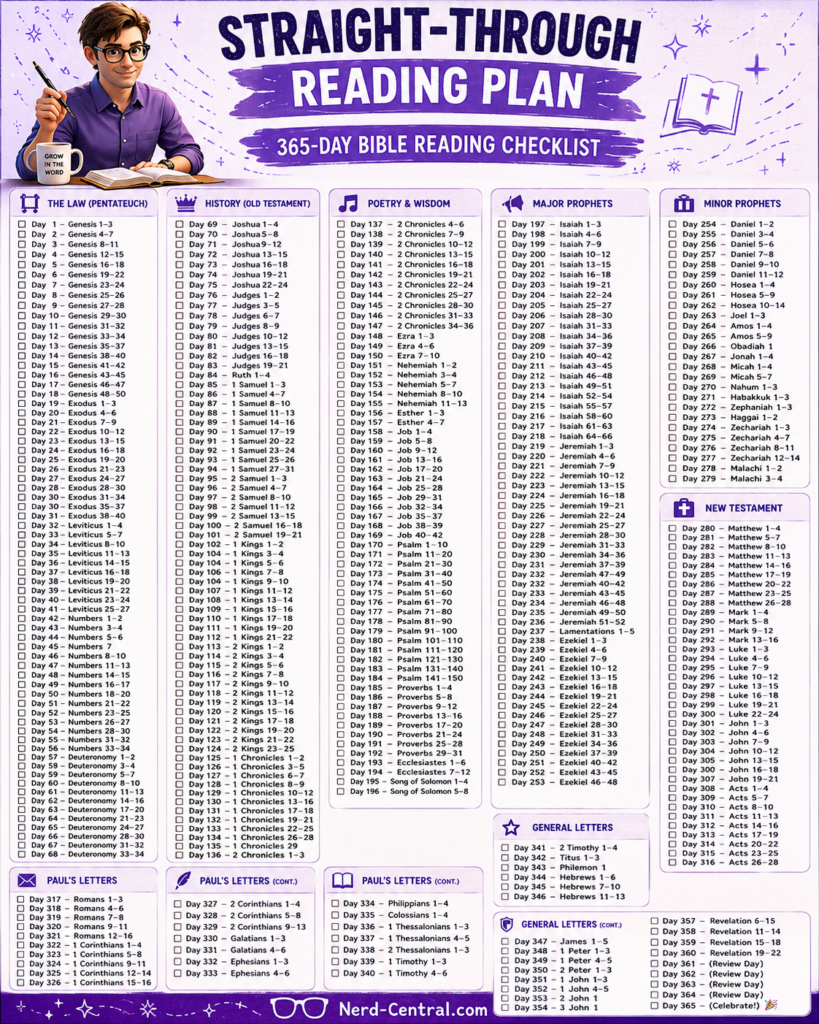
There are several good ways to read through the Bible in a year, and different styles may fit different personalities. The first style is the straight-through reading plan. This method begins in Genesis and continues through the Bible in order until Revelation. The strength of this approach is that it helps you see the Bible’s overall structure from beginning to end. You move through the books in the order they appear in most Bibles, and you gain a sense of the full journey. The challenge is that some parts of the Old Testament, such as Leviticus, Numbers, and certain genealogies, may feel difficult for a new reader. But if you stay patient, even those sections teach important truths about God’s holiness, worship, order, covenant, and faithfulness.
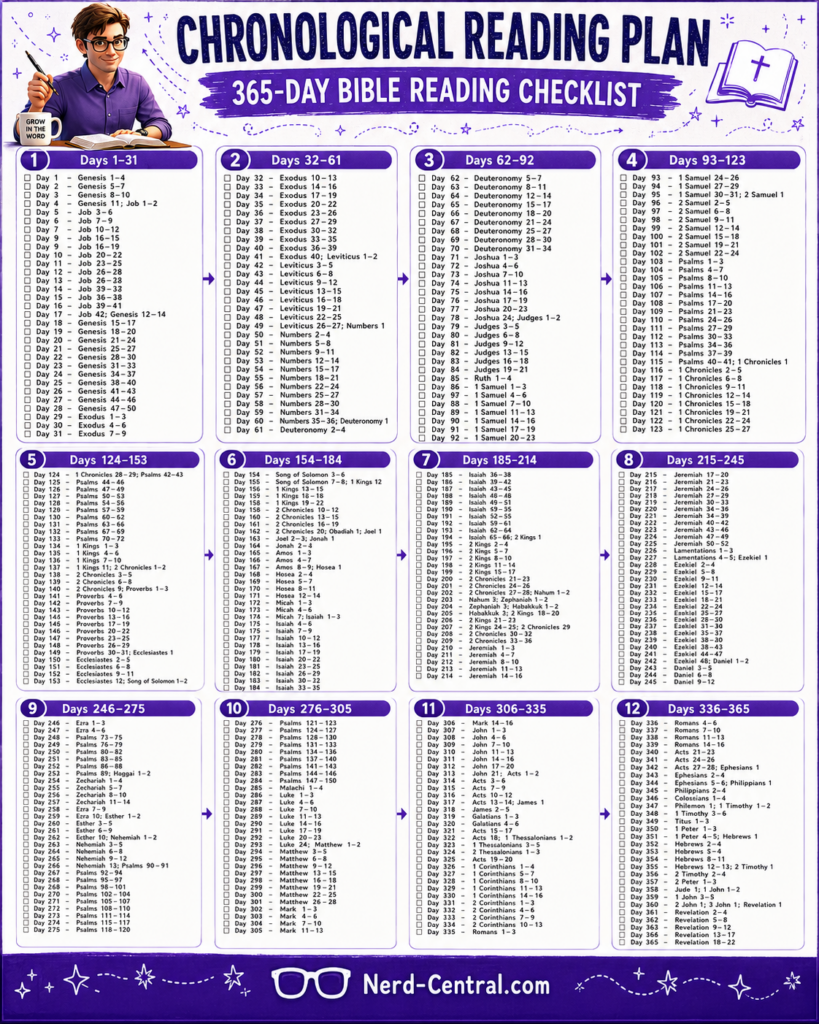
A second style is the chronological reading plan. This approach arranges the Bible according to the general timeline of events. For example, some psalms may be placed near the events in David’s life, and the prophets may be placed near the kings and historical moments they addressed. This can be very helpful for a new Christian who wants to understand how the story unfolds historically. The chronological style helps you see what was happening when certain books were written and why particular messages were given. It can make the Old Testament feel more connected and easier to follow. The challenge is that it may jump between books more often, so it helps to use a printed or digital plan that tells you exactly what to read each day.
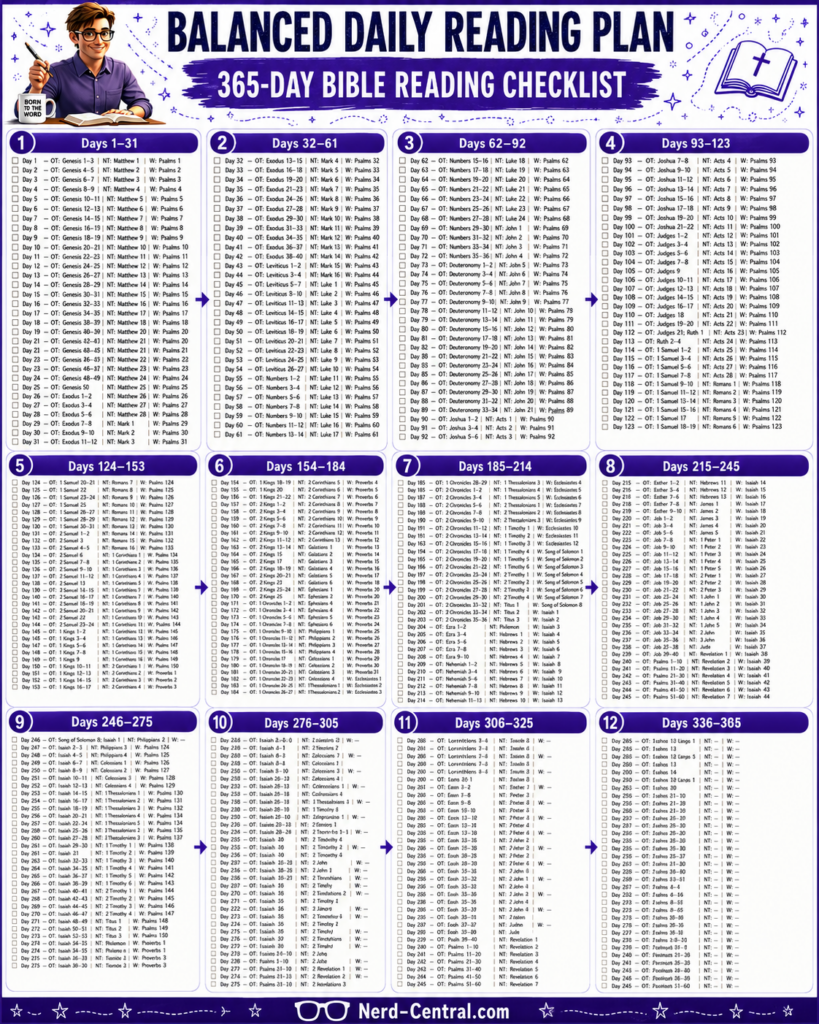
A third style is the balanced daily reading plan, sometimes called a blended plan. In this method, each day may include a reading from the Old Testament, a reading from the New Testament, a Psalm, and a Proverb. Many new Christians enjoy this style because it gives variety. If one section is difficult, another section may feel more immediately encouraging. You might read about Israel’s journey in the Old Testament, then read the words of Jesus in the Gospels, then pray through a Psalm, and then receive practical wisdom from Proverbs. This approach helps keep the daily readings fresh and reminds the reader that all Scripture works together. It also allows a new believer to spend time in the New Testament throughout the whole year instead of waiting until later in the plan.
Some believers also enjoy a fourth style, which is the five-day-a-week reading plan. Instead of assigning readings every single day, this plan gives readings for five days and leaves two open days each week. This can be very helpful for people who are worried about falling behind. Life happens. Work gets busy. Children need attention. Sickness comes. Travel interrupts routines. A five-day plan gives built-in catch-up days, which can prevent discouragement. The important thing is not to become legalistic. The goal is not to check a box perfectly every day. The goal is to keep coming back to the Word of God with humility, hunger, and faith.

Simple Practices
As you begin reading through the Bible, it is wise to pray before you read. You do not need fancy words. A simple prayer is enough: “Lord, open my heart to understand Your Word. Help me see what You want to teach me. Help me know You better and obey what You show me.” Prayer reminds us that Bible reading is not just an intellectual exercise. It is a spiritual meeting with God. The same Holy Spirit who inspired Scripture helps believers understand and apply Scripture. When you read with prayer, you are not just gathering information; you are inviting transformation.
It is also helpful to read with patience. Some passages will be easy to understand, and others will raise questions. Do not be afraid of questions. Questions are part of learning. Write them down. Ask a pastor, a mature Christian friend, or a Bible study leader. Use a good study Bible or trusted commentary when needed. But do not let the parts you do not understand stop you from reading the parts you do understand. A child does not stop eating because he does not understand how digestion works. In the same way, a Christian should not stop reading because every passage is not immediately clear. Keep reading, keep praying, and keep growing.
Another good practice is to look for what each passage teaches about God, humanity, sin, grace, obedience, and hope. Instead of asking only, “What does this mean to me?” begin by asking, “What does this show me about God?” That question will help keep your reading centered. The Bible is first and foremost God’s revelation of Himself. When you see who God is, you will also begin to understand who you are, what you need, and how you should live. Over time, Scripture will correct your thinking, comfort your heart, challenge your habits, and strengthen your faith.
Reading the Bible in a year is not about becoming proud of your Bible knowledge. It is about becoming more faithful, more humble, more rooted, and more Christlike. Knowledge without love can become arrogance, but knowledge shaped by the Spirit becomes wisdom. The goal is not to win arguments or impress others. The goal is to know God, love God, trust God, and obey God. A person who reads the Bible regularly begins to carry Scripture into daily life. The Word of God comes to mind during temptation. It brings comfort during grief. It gives courage during fear. It gives direction during uncertainty. It gives hope when the world feels dark.
Conclusion
Reading the Bible all the way through in a year is one of the most meaningful commitments a new Christian can make. It will not make every day easy, and it will not answer every question immediately, but it will place your heart before the voice of God day after day. It will help you understand the big story of Scripture, grow in your knowledge of Jesus, build spiritual discipline, recognize truth, and become more confident in your faith. Whether you choose a straight-through plan, a chronological plan, a balanced daily plan, or a five-day-a-week plan, the most important thing is to begin and keep going.
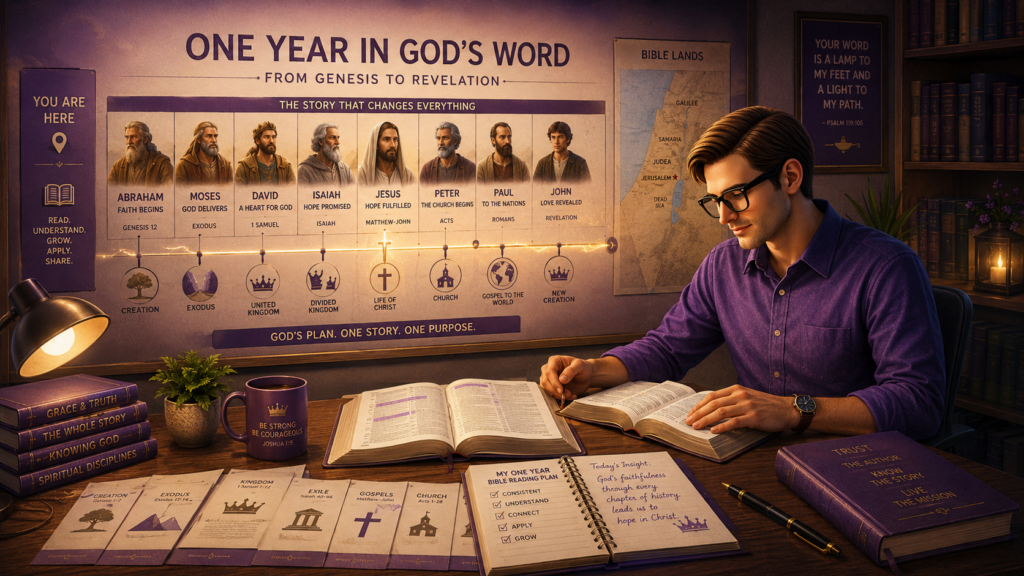
Do not approach the Bible as a burden. Approach it as an invitation. The God who created you, loves you, and saved you has spoken. His Word is not meant to sit closed on a shelf. It is meant to be opened, read, believed, prayed, and lived. Some days you may feel like you are walking through green pastures. Other days you may feel like you are climbing a steep hill. But every day you spend in Scripture is a day spent listening to the Shepherd of your soul.
So begin with faith. Open the Bible. Read a little each day. Ask God to teach you. When you miss a day, start again. When you do not understand, keep learning. When you are encouraged, give thanks. When you are convicted, repent and draw near to Christ. By the end of a year, you will not merely have finished a reading plan. You will have walked through the great story of God’s truth, grace, judgment, mercy, redemption, and glory. And by God’s grace, you will not be the same person you were when you began.